Few words make golfers brace for impact quite like “aerification.”
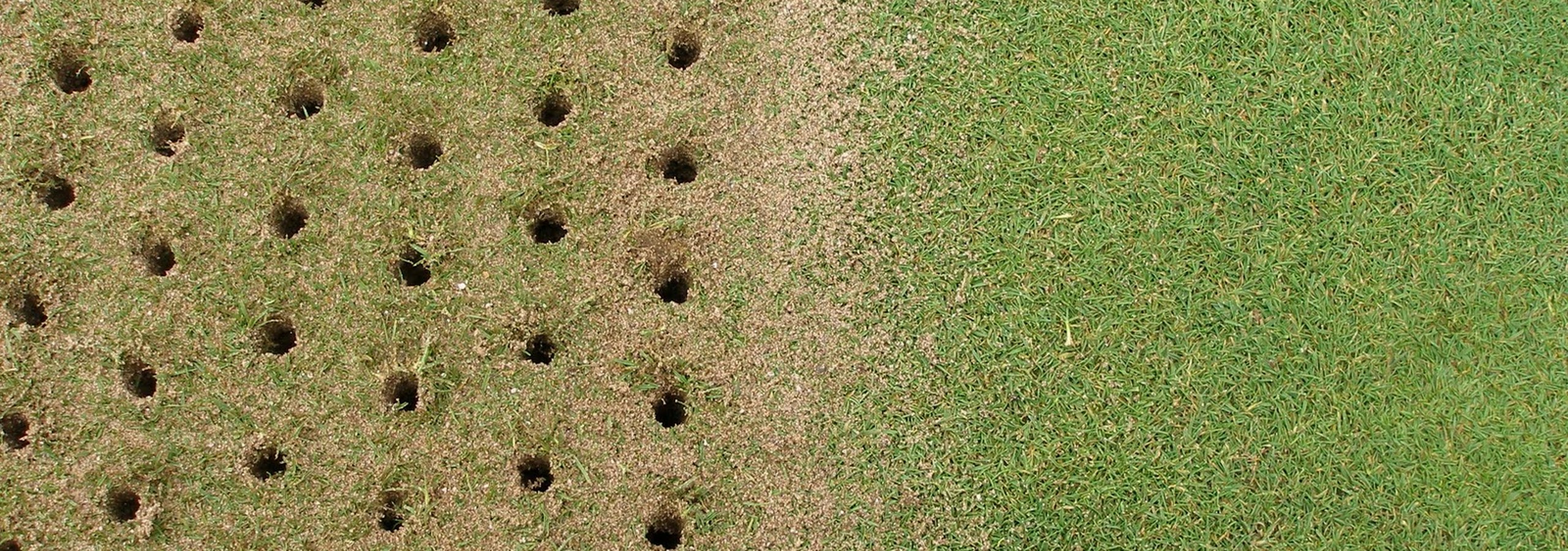
You arrive at the course expecting smooth greens, only to find small holes, a layer of sand and putting surfaces that need a little time to recover. It can be frustrating in the moment, but aerification is one of the most important things We-Ko-Pa Golf Club does to produce the firm, healthy and consistent playing conditions golfers enjoy throughout the year.
The disruption is temporary. The benefits continue long after the holes disappear.
What Happens Beneath the Putting Surface
A putting green takes a beating. Thousands of footsteps, daily mowing, rolling, irrigation and regular maintenance gradually compact the soil beneath the turf. At the same time, roots, stems and other plant material accumulate near the surface, creating a layer of organic matter commonly called thatch.
Some organic matter is healthy, but too much can act like a sponge. It holds excess moisture, restricts the movement of oxygen and makes it more difficult to maintain firm, consistent conditions.
Aerification allows the We-Ko-Pa maintenance team to address those issues beneath the surface. Small openings are created in the green, and depending on the treatment being performed, plugs of turf and root-zone material may be removed. Those openings relieve compaction and create new pathways for air, water and nutrients.
“The most important part of a putting green is the part golfers never see,” said Ryan Kreizenbeck, director of maintenance at We-Ko-Pa Golf Club. “Over time, traffic and organic matter affect how air and water move through the root zone. Aerification gives us an opportunity to relieve that compaction, remove unwanted material and create a healthier growing environment for the turf.”
Why the Greens Are Topdressed With Sand
Punching holes is only part of the process. After aerification, the greens are topdressed with clean sand that is brushed and worked into the openings.
That sand helps dilute the remaining organic matter and improves the physical structure of the root zone. It also supports water movement, encourages stronger rooting and helps the surface remain firm rather than becoming soft or puffy.
Over time, a well-planned program of aerification and topdressing contributes to smoother ball roll, more consistent green speeds and putting surfaces that recover more effectively from traffic and ball marks.
The sand golfers see immediately after aerification is therefore much more than a temporary inconvenience. It is part of the foundation for better playing conditions throughout the season.
Why Aerification Happens During the Arizona Summer
The timing may seem unusual. Why perform such an aggressive maintenance practice during the hottest part of the year?
The answer is bermudagrass.
Bermudagrass thrives in warm weather and grows most vigorously during the summer. Aerifying during that active growing period gives the turf the strength and energy it needs to recover. Warm soil, long days and healthy plant growth allow the grass to spread across the openings and restore the putting surface much faster than it could during cooler months.
“We schedule this work when the bermudagrass is actively growing because that gives us the best opportunity for a strong, uniform recovery,” Kreizenbeck said. “The summer heat may appear stressful, but it also creates the growing conditions that help the turf heal and allow us to achieve the agronomic results we need.”
The maintenance team carefully manages irrigation, nutrition, mowing and rolling throughout the recovery period. As the turf strengthens and the openings close, normal mowing heights and green speeds are gradually restored.
A Short-Term Sacrifice for Long-Term Consistency
Golfers understandably judge a green by what happens when the ball leaves the putter. The maintenance team must also consider everything happening several inches below it.
“Nobody looks forward to putting across a little extra sand, and we understand that,” said Eric Dettman, head golf professional at We-Ko-Pa Golf Club. “What golfers experience for a short period plays an important role in creating the firm, smooth and consistent greens they expect from We-Ko-Pa during the rest of the year.”
We-Ko-Pa’s two-course operation also allows aerification to be staggered between Cholla and Saguaro. While one course receives the attention it needs, golfers can continue to enjoy quality conditions on the other.
Aerification will never be the most popular item on the golf calendar. It is, however, one of the primary reasons the greens can perform at such a high level when the busiest months of the season arrive.
A few days of holes and sand help create months of better golf. That is a trade worth making.