
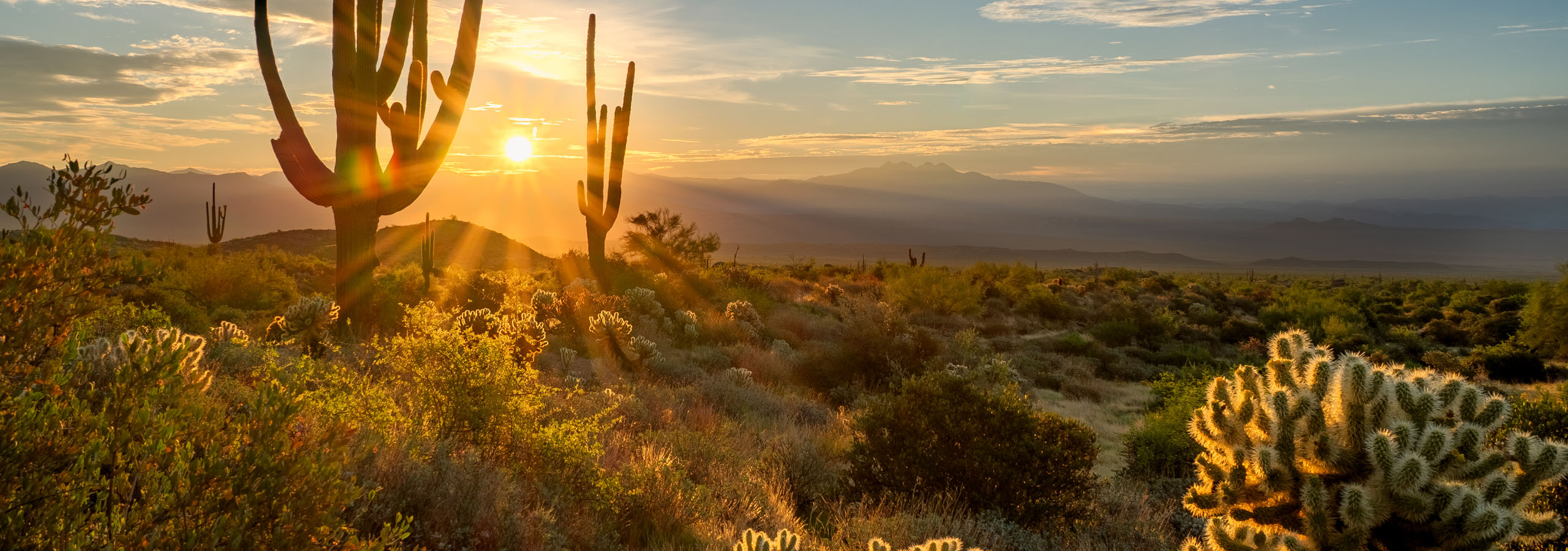
Golf courses are often named for their founders, famous golfers or geographical landmarks. At We-Ko-Pa Golf Club, the names of its two award-winning courses come directly from the Sonoran Desert landscape that surrounds them. Saguaro and Cholla are named for two of the region’s most recognizable cacti, each with its own distinctive appearance, adaptations and place in the desert ecosystem.
The names are fitting for a golf destination where the natural landscape plays such an important role in the experience. And while the two courses share the same spectacular setting, the plants that inspired their names are every bit as different as the golf courses themselves.
Saguaro: The Giant of the Sonoran Desert
Few plants are as closely associated with Arizona as the saguaro cactus. Found naturally only in the Sonoran Desert, these towering giants can reach heights of 40 to 50 feet and live for 150 to 175 years, with some surviving more than two centuries.
Their growth is remarkably slow. According to the National Park Service, a saguaro may grow just an inch or two during its first eight years, and its first arms might not appear until it reaches 50 to 70 years of age. In particularly dry environments, that process can take even longer.
Saguaros also play an essential role in the desert ecosystem. Their white flowers provide nectar for birds, bats and insects, while their red fruit offers food and moisture during the hottest months. Woodpeckers excavate nesting cavities in their trunks, creating shelters that other birds may eventually occupy.
Hundreds of these impressive plants help define the landscape of We-Ko-Pa’s Saguaro Course, designed by Bill Coore and Ben Crenshaw. The architects worked with the property’s natural contours, creating broad fairways, strategic bunkering and greens that reward thoughtful approaches. The result is a course that feels remarkably connected to the desert surrounding it.
Cholla: A Desert Survivor with a Prickly Personality
While saguaros command attention with their towering silhouettes, cholla cacti have developed an entirely different way of making an impression.
There are numerous species of cholla throughout the Sonoran Desert, ranging from the densely spined teddy bear cholla to the branching chain-fruit cholla. Their segmented stems and formidable spines make them among the desert’s most recognizable plants.
Some cholla have earned the nickname “jumping cactus,” although they don’t actually jump. Their stem segments detach easily when brushed by an animal or unsuspecting passerby. The segments can then travel away from the parent plant, eventually falling to the ground and potentially taking root in a new location.
It’s an ingenious reproductive strategy, although anyone who has encountered one up close might have a less flattering description.
Cholla’s ability to thrive in rugged desert conditions makes it an appropriate namesake for We-Ko-Pa’s original golf course. Designed by Scott Miller, the Cholla Course features dramatic elevation changes, natural desert washes and a routing that takes full advantage of the property’s varied terrain. Its elevated tees and sweeping mountain views provide a distinctly different experience from its sister course.
Two Courses Rooted in the Same Desert
Opened in 2001, Cholla introduced golfers to a remarkable stretch of Sonoran Desert on land belonging to the Fort McDowell Yavapai Nation. Saguaro followed in 2006, giving We-Ko-Pa a second championship-caliber layout with its own architectural personality.
Today, the two courses offer golfers different ways to experience the same extraordinary landscape. The natural vegetation, desert washes, mountain views and native cacti are integral parts of what makes both courses memorable.
And the next time you play either course, take a moment to appreciate the plants that inspired their names. Some of the mature saguaros lining the fairways may have been growing long before the first golf ball was ever struck at We-Ko-Pa, while the surrounding cholla continue to demonstrate the remarkable ingenuity of desert life.
They are fitting namesakes for two courses that owe so much of their character to the Sonoran Desert.